Unlock Significant Savings with Cutting-Edge Technology
WHY YOU NEED A CLEAN POWER SYSTEM
The consensus of opinion is once a Building Automation System (BAS, EMS, BMS) is installed the building has become as efficient as it can be. This is a myth. Your BAS, et al, does not address the inefficiency in the distribution of power within the building. Only a Power Conditioning System (PCS) addresses the inefficiency in power distribution in the building. How so? Let’s take a look at how electricity works and the problem caused.
WHAT IS REACTIVE POWER
The electrical loads served by electric utility companies are generally primarily resistive (such as incandescent light bulbs) or primarily inductive (such as induction motors). The inductive loads draw a combination of kilowatts (real power) and kilovars (reactive power). Reactive power is
the electrical energy required by inductive loads—such as the copper coils (windings) in a motor—to create and maintain the magnetic fields necessary for rotation. It does not perform "useful" work (like turning a shaft) but acts as the energy needed to energize the iron core, shifting the current out of phase with the voltage.
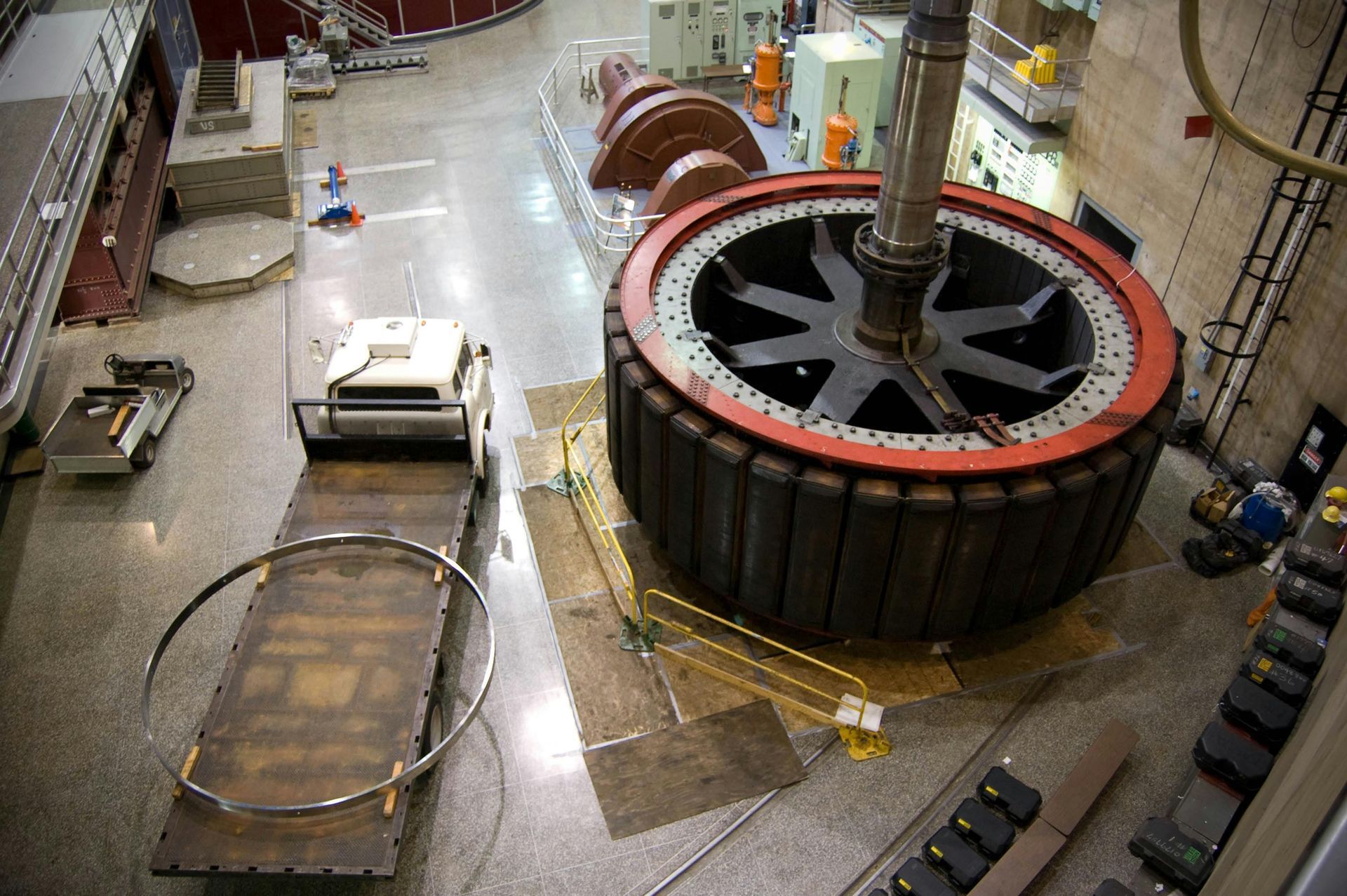
How Reactive Power Excites the Motor Core:
- Magnetizing the Core: When alternating current (AC) flows into the motor windings, the inductive reactance of the coils causes the current to lag 90 degrees behind the voltage.
- Magnetic Field Expansion: As the voltage increases in the first half of the AC cycle, reactive power flows from the source into the motor coils, storing energy and expanding the magnetic field through the iron core.
- Rotation Force: This magnetization aligns the magnetic domains in the core, creating the rotating magnetic field necessary for electromagnetic induction, allowing the motor to turn

How Reactive Power "Returns" (Not "Lost to Ground"):
Reactive power is not typically lost to ground; it is designed to be returned back to the power source.
- Collapse of Magnetic Field: During the second half of the AC cycle, the voltage decreases, causing the magnetic field around the motor coils to collapse.
- Return to Source: As the field collapses, it induces a voltage in the coil, sending the stored energy back toward the source.
- Continuous Oscillation: This cycle of building the field, breaking it, and returning the energy happens 120 times per second (for 60Hz AC), with energy "sloshing" back and forth.
Where Losses Occur
While the reactive energy itself is returned, the increased current needed to drive this process causes real, resistive losses. This extra current heats up the wires, leading to
𝐼2𝑅 (copper) losses and
core losses in the motor iron, which are dissipated as heat (often considered "lost" to the surrounding environment, not technically ground). Voltage drops, dips and sags, and ongoing purchases of reactive power from the utility company because of the inherent inefficiency. Heat gain shortens useful life of all electrical equipment in the building which results in increased maintenance and operating costs over time.
Mathematical calculations and tests conducted at leading test labs (EPA, NASA, NIST) confirm that regardless of the loading of a motor, optimizing for line losses will render about the same savings per hour in wattage in a given circuit. Low voltage, resulting from excessive current draw causes motors to be sluggish and overheat. As power efficiency decreases, total line current increases, causing further voltage drop. Losses caused by poor power factor (inefficiency in power distribution) are due to reactive current flowing in the system. These are watt-related charges and can be eliminated through installing power conditioning equipment that make use of capacitive devices.